
Researchers in the high-profile area collaborate in various collaborative joint projects. These include large-scale projects such as the Leibniz ScienceCampus Digital Public Health, or the now completed collaborative project AEQUIPA.
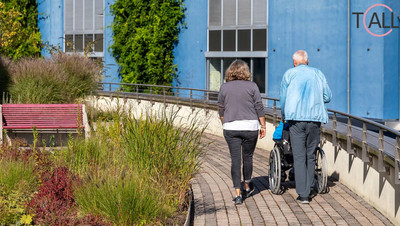
TCALL Transfer Cluster of Long-Term Care Teaching Facilities
The transfer cluster aims to create a cluster of "academic teaching nursing homes" building a bridge between research, education, and care practice. The goal is not only to facilitate mutual knowledge transfer, but also to enhance the quality of life for people in need of care, improve the quality of care itself, and ultimately improve working conditions in the nursing profession.
© Photo: Tim Gloystein / Bitenotbark GmbH

Leibniz Living Lab Gesundheitswerkstatt Osterholz
The Leibniz Living Lab – Gesundheitswerkstatt Osterholz brings together researchers from the high-profile area with citizens from the neighborhood and other stakeholders from environmental, social services, health care, and health initiative sectors. The work centers on participatory action research and integrated knowledge transfer.
© Photo: Jason Goodman / unsplash

Leibniz ScienceCampus "Digital Public Health"
At the Leibniz ScienceCampus "Digital Public Health," scientists engage in interdisciplinary research on key questions related to digitalization in public health. This encompasses not only technological developments and their application in health prevention and care, but especially ethical and legal dimensions.
© Photo: gremlin / iStock

Nursing Innovation Centre (PIZ)
At the " Nursing Innovation Centre (PIZ)," scientists from the high-profile area collaborate with colleagues from the University of Oldenburg, OFFIS, and the Hanse Institute Oldenburg. The research centers on technological innovations and their potential applications and implementation conditions in nursing care.
© Photo: Possessed Photography / unsplash

ViBe-care
The aim of ViBe-care is to test the suitability of a video-based care assessment and to identify the prerequisites for regular implementation in the outpatient and inpatient sector. Both the reliability and the basic acceptance of video-based care assessments from the perspective of all stakeholders involved will be analysed in comparison to face-to-face assessments.
© Photo: Bongkarn Thanyakij / iStock
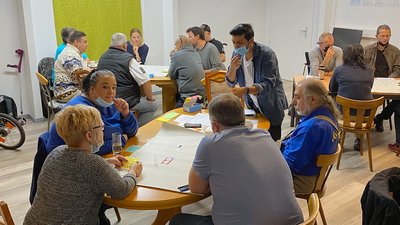
FORESIGHT
The FORESIGHT project investigated how to promote health literacy among individuals experiencing long-term unemployment. Through participatory approaches, interventions to enhance health literacy were developed and implemented in collaboration with participants and the Gröpelinger Recyclinginitiative e.V.
© Photo: FORESIGHT Project / BIPS

AEQUIPA
Within the AEQUIPA prevention network, researchers from the high-profile area partnered with colleagues from other universities and institutes to study physical activity promotion for people over 65. The work centered on the use of digital technologies and health equity.
© Photo: Jacob Wackerhausen / iStock
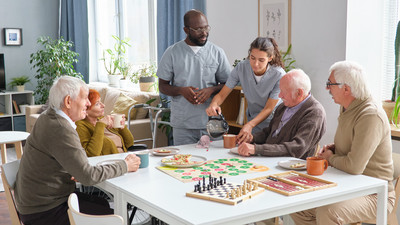
DemWG
The project “Reducing the risk of hospitalisation for people with dementia in assisted living communities – DemWG” was a research project aimed at improving care for people with dementia and cognitive impairments in community-based shared housing.
© Photo: shirinosov / iStock.
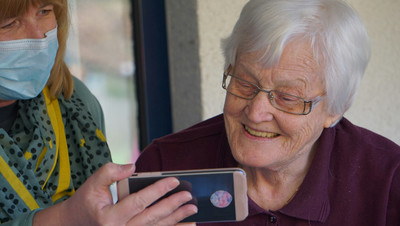
DigiTechNH: Digital technologies to improve social interaction and participation of people with care and support needs in inpatient long-term care
The DigiTechNH project explored which digital tools can enhance social interaction and participation for residents in long-term care facilities. With the involvement of all stakeholder groups (nursing professionals, care recipients, and their family members and caregivers), various technologies were piloted to examine different usage patterns (e.g., related to gender, age, and/or disabilities).
© Photo: Georg Arthur Pflueger / unsplash

MVP-STAT: Needs-Based Provision of Medical Care to Nursing Home Residents
The study addressed challenges in medical care provision for people requiring care in long-term care facilities. By linking nursing home data with routine health data, instances of over- and undertreatment were identified. Case reconstructions and expert interviews were used to identify factors for developing needs-appropriate care strategies.
© Photo: Jacob Wackerhausen
PeBeM
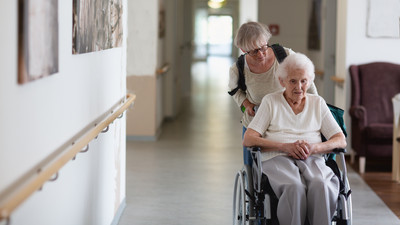
The model program built on the "PeBeM Study," which developed a new instrument for determining staffing levels in long-term care. This instrument incorporates both the composition and qualifications of nursing staff and the needs of care recipients, and was piloted in different facilities in this project.
© Photo: Silvia Jansen / iStock
M-Gender
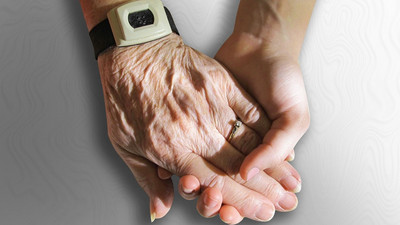
The "M-Gender" research project piloted a "care bot" intended to reduce the mental burden on relatives providing informal care to family members — that is unpaid, non-professional caregiving. The digital tool was co-developed with affected individuals, researchers, and representatives from associations, self-help groups, and organizations supporting informal caregivers.
© Photo: PublicDomainPictures / pixabay

Research Cluster "Healthy City Bremen: Interprofessional, Digital, Sustainable"
The "Healthy City Bremen: Interprofessional, Digital, Sustainable" research cluster was established as a cross-institutional research and transfer focus, tackling a future issue of central importance to social development. The cluster examined challenges and potential approaches to solutions in different areas relevant to a healthy city.
© Photo: Ryoji Iwata / unsplash