Equity
Equity in the context of health and healthcare systems is a common, cross-sectional topic within the high-profile area. However, equity cannot be interpreted as a consensual term; rather, it can be assumed that highly divergent concepts of equity exist in different sectors and among the different stakeholders in healthcare (for instance, pertaining to equity of contributions, distribution and equitable access, financial equity, social equity etc.). In order to be able to put empirical findings (e.g. on social and health inequality, but also on preventive and other interventions) into perspective and draw up appropriate standards, a theoretical approach towards issues of equity in the health context is needed.
Social Equity
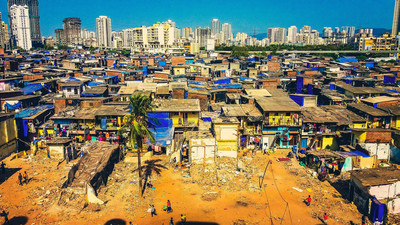
Health opportunities are unequally distributed, generally disadvantaging poorer and structurally disadvantaged groups and individuals. Research in this area focuses on health inequalities, for example in relation to migration and gender. We analyze to what extent inequalities are unfair and therefore unjust and examine the impact of public health interventions on the distribution of health opportunities. This includes issues of need, participation and access to health-related services.

Equity of Access
Access to health services is a key prerequisite for maintaining and improving one's health or preventing it from deteriorating. However, access is very unequally distributed, and conditions of inequality can be found both at the level of concrete interaction and at the institutional level. Members of the high-profile area research practices of inequality and institutional mechanisms of exclusion. They also develop and evaluate concepts to increase equal access for different target groups.
Environmental Equity
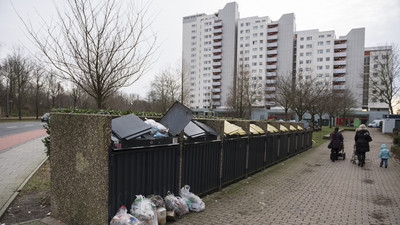
This field of research and action focuses on questions of (1) socially unequal distribution of environmental burdens and resources (distributive justice), (2) socially different vulnerability regarding the harmful health effects of environmental exposures and (3) different opportunities for participation and realization (procedural justice). For example, we analyze which population groups or regions are unfairly or disproportionately exposed to impacts such as air pollutants or consequences of climate change and what social inequalities exist in terms of participation in environmentally relevant societal decision-making processes such as noise action planning.

Gender Equity
The concept of gender equality assumes that the distribution of opportunities, resources and responsibilities between women and men or gender groups should not disadvantage either group. In our research, we examine how gender stereotypes, gender-based discrimination, differing power relations, and varying gender-specific needs contribute to health inequalities. From an intersectionality perspective, we analyze how gender interacts with other positions of social inequality in shaping societal power relations and health equity.